Don't break out the tools yet. There
may be an easier solution.
WATER IN FUEL TANK "SOLUTION" BY PSC
Word of advice: though it may seem tempting to stock up on gasoline while
it's cheap and store it for later use, please don't. Ethanol-blended fuels
and other biofuels are highly susceptible to degradation over time (due to
water, sludge, and other contaminants), no matter how air-tight your
container.
In 2005, the United States Congress mandated that 10% of the nation's fuel
supply had to be blended with ethanol (ethyl alcohol derived from corn).
For many, this change was marked solely by a sticker on a gas pump;
however, for those more intimately aware
of the inner-workings of their vehicles, the effects of these biofuel
additives on engine performance may prove far more bothersome.
In addition to negatively affecting fuel economy, the addition of biofuels
in diesel and gasoline significantly lowers their shelf-life. While diesel
fuel may be safely stored for up to 90 days, gasoline may only be stowed
for 30 days or less.
In short, your fuel will begin to degrade and eventually become unusable.
So, while it may seem effectual to reuse old gasoline,
re-purposing untreated fuel is likely against your better judgment.
However, there may still be hope for spoiled fuel: but first we seek to
better understand the reasons for this rapid deterioration.
What constitutes bad fuel?
Ethanol fuel is highly subject to a phenomenon known as phase
separation, which occurs when water comes into contact with ethanol
fuel.
Ethanol is a hygroscopic substance,
which means that it is capable of attracting water as well as absorbing
and retaining it. When the water in your fuel reaches a certain saturation
point, the ethanol and water willphase
separate, meaning the ethanol will separate from the fuel solution
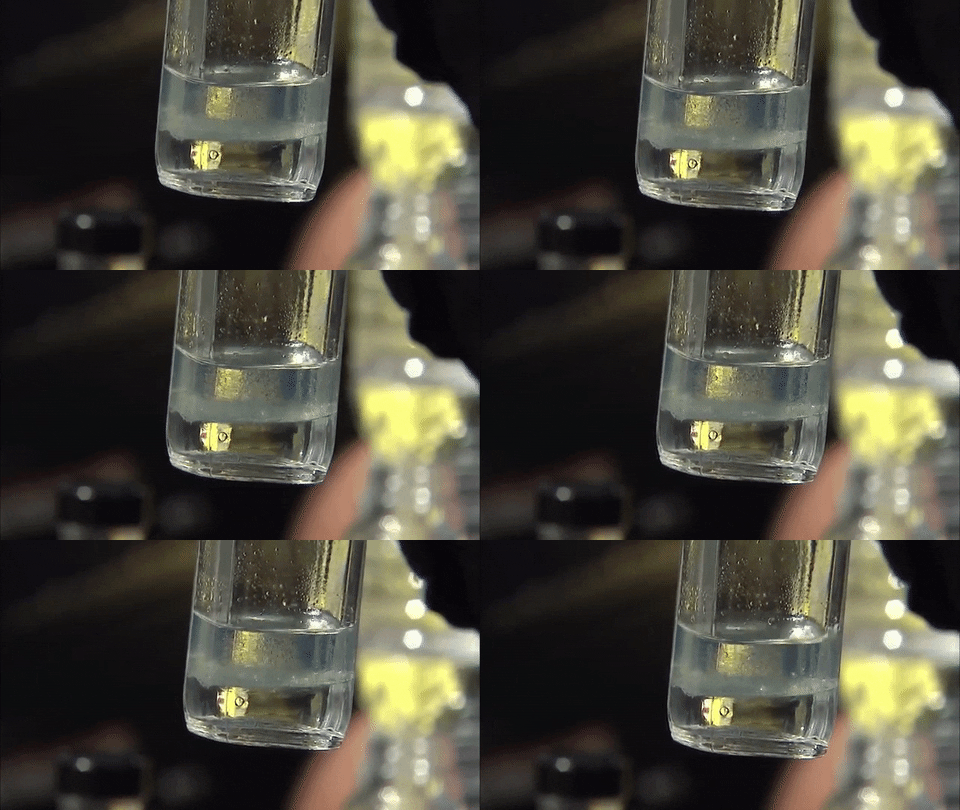
and form layers in the tank: an upper layer of gasoline, a milky layer of
ethanol/water, and sometimes a third layer of just water.
Imagine the considerably less satisfying and translucent variety of
Italian salad dressing. At the top, you'll find oil; in the middle,
vinegar/water; and at the very bottom, all the spices. That's phase
separation! Note:
even if you shake it up, the internal components will readily begin to
separate again.
This fuel has undergone Phase Separation. NOT good for your engine.
This phenomenon occurs wherever fuel is stored, including both above
ground and underground storage tanks, vehicle tanks, boat tanks, equipment
tanks, and even gas cans. Regrettably, degraded fuel will wreak more havoc
on your equipment than you'd likely care to admit.
For example, if phase separation occurs in your fuel tank, you will
immediately begin to notice problems with your engine. Not only can water
contamination delay or completely prevent your engine from turning over,
water-ridden fuel drastically affects octane rating and can actually
contribute to engine damage.
Perhaps the most frustrating aspect of the whole debacle is that you
can't really prevent
water from entering your fuel system. Water can get into your fuel even
when you least expect it; daily and seasonal temperature changes can lead
to condensation, which over time can result inphase
separated fuel.
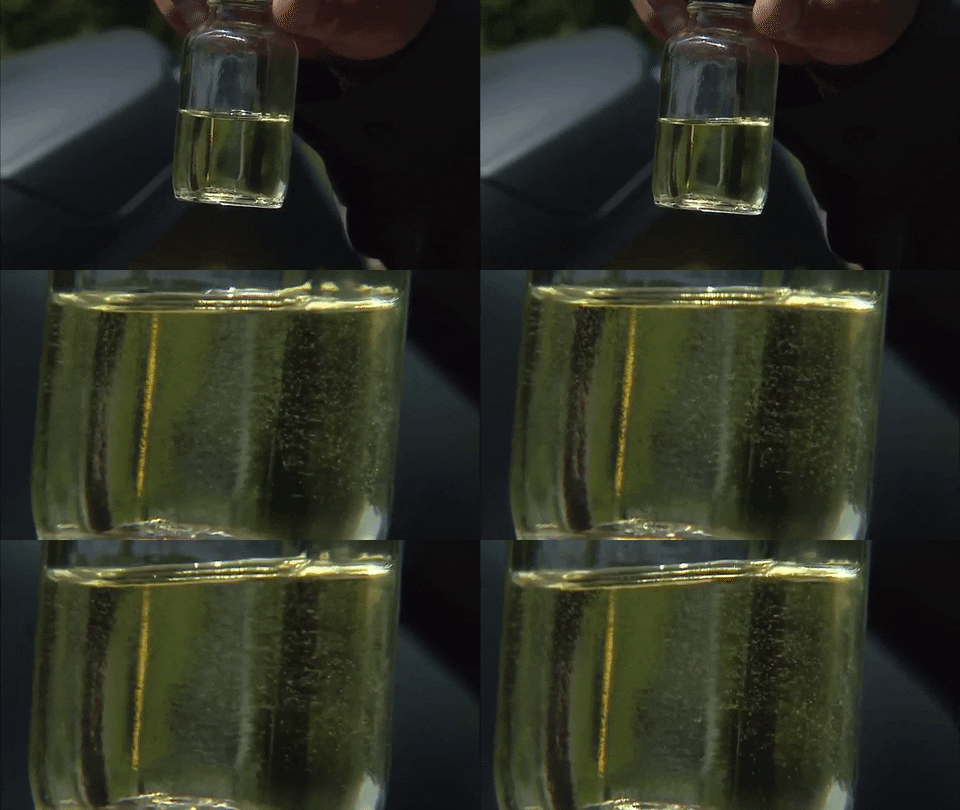
This is the same fuel as above, treated with an emulsifying additive,
K-100. This allows the water to be burned off, rather than cause any
damage to internal components. Remember: ethanol actually draws water in over
time, making the phrase clean,
old fuel little
more than a misnomer. Seemingly, the only option would be to somehow reverse phase
separation or otherwise correct it: which sounds much more like a task
reserved for scientific researchers.
Thankfully, we know a couple.
At PSC, we make certain our products actually work before we ever even consider selling
them to our customers. If they don't work, they get sent back with a kind
thank you note.
Of all of those products, fuel additives are among the most rigorously
tested, if not only because
of the many claims each new bottle bears upon its label.
Common water-separating additives fail to eliminate moisture from fuel
reserves, simply enhancing the polarizing physical makeup's of fuel and
water. While these additives work to separate the two substances, they do nothing to
get the waterout of
the tank, which in essence is thesource of
the problem.
Unlike other fuel treatments, the 50-some-year-old fuel additive, K-100,
actually allows the water to emulsify; when added to fuel, K100 bonds
itself to the water molecules and encapsulates them: turning the
non-combustible fluid into a burnable organic compound. As your engine
runs, the water burns along with the fuel, releasing steam which in turn
actually helps clean your engine.
Water is denser than fuel, so in its separated state, it will remain on
the bottom of your fuel tank. The continual presence of water can block
fuel lines and filters, damage fuel injector tips, lead to corrosion and
acid formation, as well as support microbe growth in diesel fuel, making
the case for K-100 all the more appealing.
K-100 is an all-encompassing, universal gasoline and diesel additive
thatcleans,
eliminates water, lubricates, reduces emissions, and stabilizes old fuel
as well as boosts octane rating. K100 Fuel Treatments are for use
with all gasoline and diesel-powered equipment and are formulated for use
with all fuels, including E-10, ULSD, Off-Road, Bio-Diesel, and Home
Heating Fuels.
To CORRECT or PREVENT fuel phase separation and STORE FUEL: